Loading game..._




Rhythm Tengoku (J)(WRG)
Rhythm Tengoku is a 2006 Game Boy Advance rhythm game from Japan that turns tasks like following a drill sergeant and plucking hairs from an onion into short musical challenges, so you can learn one cue at a time, hear how five different games fit into a single song in Remix 1, and return to the games you know best to earn medals and try for a Perfect.
- Platform
- GBA
- Added
- 2026-06-14
Embed this game
From the opening rhythm check to your first remix
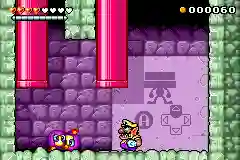
Nintendo published Rhythm Tengoku, which Nintendo SPD and J.P. Room developed as the first game in the Rhythm Heaven series. It moves between comic scenes rather than following a single character through a story. In Rhythm Datsumō you pluck hairs from an onion with a face, while Marcher puts you at the back of a squad taking orders from Sarge. The setting changes, but the job is always to fit your action into the music.
A fresh game opens with Rhythm-kan Check, a sense of rhythm test that you clear before the main menu opens. From there, Rhythm Games leads to Stage 1, which starts with Karateka and Rhythm Datsumō before moving on to Marcher, Air Batter, and Pachi Pachi Sanninshū. The games have their own rules, so listen for what the current cue asks you to do rather than carrying a button pattern over from the previous game.
The 48 rhythm games are arranged in eight stages of five games and a remix. Each remix switches between the five games from its stage while a new song plays. An OK is enough to clear a game, and clearing the remix opens the next stage. In Remix 1, listen for the cue that tells you which action to take while keeping the pulse of the song through the change.
A Superb earns a medal and makes that game eligible for a Perfect Campaign. Medals unlock extras in the Omake Corner, including rhythm toys and Endless Games. Perfect Campaign gifts serve a different purpose: reading material goes to the Rhythm Reference Room, while music gifts can be heard in Studio, where you can drum along. Those give you reasons to revisit games even after their stage is cleared.
Get the sound ready for Rhythm-kan Check
Set your volume before the opening rhythm test. Click Play Now to jump down to the embedded player, which then has focus for your keystrokes. Use its Start Game button to start the GBA core and load Rhythm Tengoku. You can get to the test without fetching a ROM or installing an emulator yourself. The wait on that first launch can vary. If you never reach the game, refresh once and retry Start Game.
If Sarge's voice breaks up in Marcher, pause any video streaming in another tab and repeat the same drill before adjusting your timing. On a phone or tablet, if the player offers working touch controls, try both turns in Marcher. If you have to look down to find the arrows, practice them there before taking that layout into Remix 1.
Want a snapshot before a Remix 1 retry? Save State normally downloads a .state file you can reopen with Load State. For a browser copy instead, choose Keep in Browser under Save State Location before saving, where available. That copy stays in the active profile rather than syncing to the cloud. The game's own saved progress is separate.
Learn four commands in Marcher
Marcher, the third game in Stage 1, gives four inputs distinct jobs. Rest two fingers on Z and X and keep your other hand near the arrows. When Sarge calls a turn, face the indicated direction on the squad's beat. A turn in the wrong direction is still wrong even if you press on time.
If you keep reaching for the wrong arrow, open Control Settings and remap the turns to keys you can find by feel. With a compatible gamepad, try the face buttons for marching and halting and the directional pad for turns. Test all four commands in Marcher before trying Remix 1.
| Z (GBA A) | March on Sarge's march command. |
|---|---|
| X (GBA B) | Halt in time with the squad. |
| Left Arrow (D-pad Left) | Face left on the left command. |
| Right Arrow (D-pad Right) | Face right on the right command. |
Recognize the Japanese Game Boy Advance release
The Game Boy Advance original came out in Japan on August 3, 2006, with Japanese text and single-player play. A fresh file starts with Rhythm-kan Check, and Stage 1 builds toward Remix 1. To find Marcher in the Japanese menus, look for マーチャ or select the third game in Stage 1.
Rhythm Tengoku Taikenban was a separate kiosk demo, not another name for the full handheld game. It had a shortened rhythm check and just three playable rhythm games: Karateka, Rhythm Datsumō, and Pachi Pachi Sanninshū. The demo could award medals but had no Omake Corner. In the full game, clearing stages takes you beyond those three games, and medals open extras.
The 2007 arcade version, published by Sega, has a two-player mode in which two people control the middle squadmates in Marcher. In the GBA game, you're the rookie at the end of the line. The Nintendo DS sequel, Rhythm Tengoku Gold, uses touchscreen controls instead of the original's buttons. On-screen buttons in a mobile browser still send GBA inputs, not the sequel's touch gestures.
Japan (GBA): The full game has eight stages and the Omake Corner; Taikenban has one trial stage and no Omake Corner.
Practice the cue that costs you the clear
Clear Rhythm-kan Check to open the menu, then aim for OK in each Stage 1 game before chasing medals. When you reach Marcher, use one run to learn what the four orders sound like: susume for march, tomare for halt, hidari for left, and migi for right. On the next run, keep counting the beat under Sarge's words so you can act with the squad rather than pressing as soon as you recognize the command.
If you keep missing a turn, check direction before adjusting timing. Pick one call, such as hidari, and make sure you reach for Left Arrow without looking away from the squad. If you face the right way but move out of step, replay and focus on the moment the rest of the line turns. For a missed halt, do the same with X instead of changing how you handle every cue.
In Remix 1, notice which game you lose track of when the scene changes. Return to that standalone game and practice its cue, then try the remix again without resetting your count at the transitions. Once that remix is cleared, move on to Stage 2 or pick a familiar game for a Superb. If a Perfect Campaign appears, use those attempts when you can already get through the troublesome cue reliably: one miss costs an attempt, and each offer gives you three chances.
Rhythm Tengoku questions
Why does Rhythm-kan Check come before the main menu?
On a fresh file, you have to clear the opening rhythm test before you can choose Rhythm Games or Studio from the menu. Once the menu opens, you can choose Rhythm-kan Check again, and this time you can pause or quit the test.
Can a second player join the squad in Marcher?
The Game Boy Advance Marcher is for one player, who controls the rookie at the back of the line. Marcher 2P is an arcade mode in which two players control the middle squadmates. Marcher 2 on GBA is a later variation, not that mode.
Will my Stage 1 clears still be there when I come back?
Rhythm Tengoku keeps clears in its own saved game data, not in a save state. Where the player can store game saves, reopen it in the same browser profile and check that your ranks are still there before starting another stage.
Do I need five Superb ranks to move past Remix 1?
An OK is enough to clear each of the five Stage 1 games and reach Remix 1. An OK on the remix opens Stage 2. Go back for Superb ranks when you want medals or a chance at a Perfect Campaign.
Where do I play music earned in a Perfect Campaign?
Open Studio from the main menu to listen to music you've received as a gift, then drum along if you want to practice the pulse. Reading gifts go to the Rhythm Reference Room instead, so check there for those rewards.